
Does your website feel more like a digital brochure than a powerful sales tool? For many ambitious UK businesses, an outdated or underperforming site isn’t just a missed opportunity-it’s a genuine barrier to growth. The problem often lies in a fundamental misunderstanding of what modern web design truly entails. It’s no longer just about aesthetics; it’s the engine room of your digital marketing, a strategic blend of art, technology, and psychology designed to attract and convert customers.
This guide is engineered to cut through the noise.
We’ll demystify the jargon of UX and UI to conversion-focused SEO, and explore the critical elements that set a high-performing website apart from a digital relic. By the end, you will have the clarity to make informed decisions, understand how to achieve a real return on your investment, and be ready to transform your website into your most effective business-growth asset.
Beyond Aesthetics: What is Modern Web Design, Really?
When ambitious businesses think of web design, they often picture beautiful layouts and striking colours. While aesthetics are crucial, modern web design is far more than a digital art project. It is the art and science of creating a digital experience engineered for a single, powerful purpose: to turn your visitors into loyal customers. For a deeper dive into its core principles, a great resource is the Wikipedia entry on What is Web Design?. In today’s market, your website isn’t just a brochure; it’s your hardest-working sales and marketing asset, operating 24/7 to grow your business. It demands a strategic approach that balances form, function, and performance.
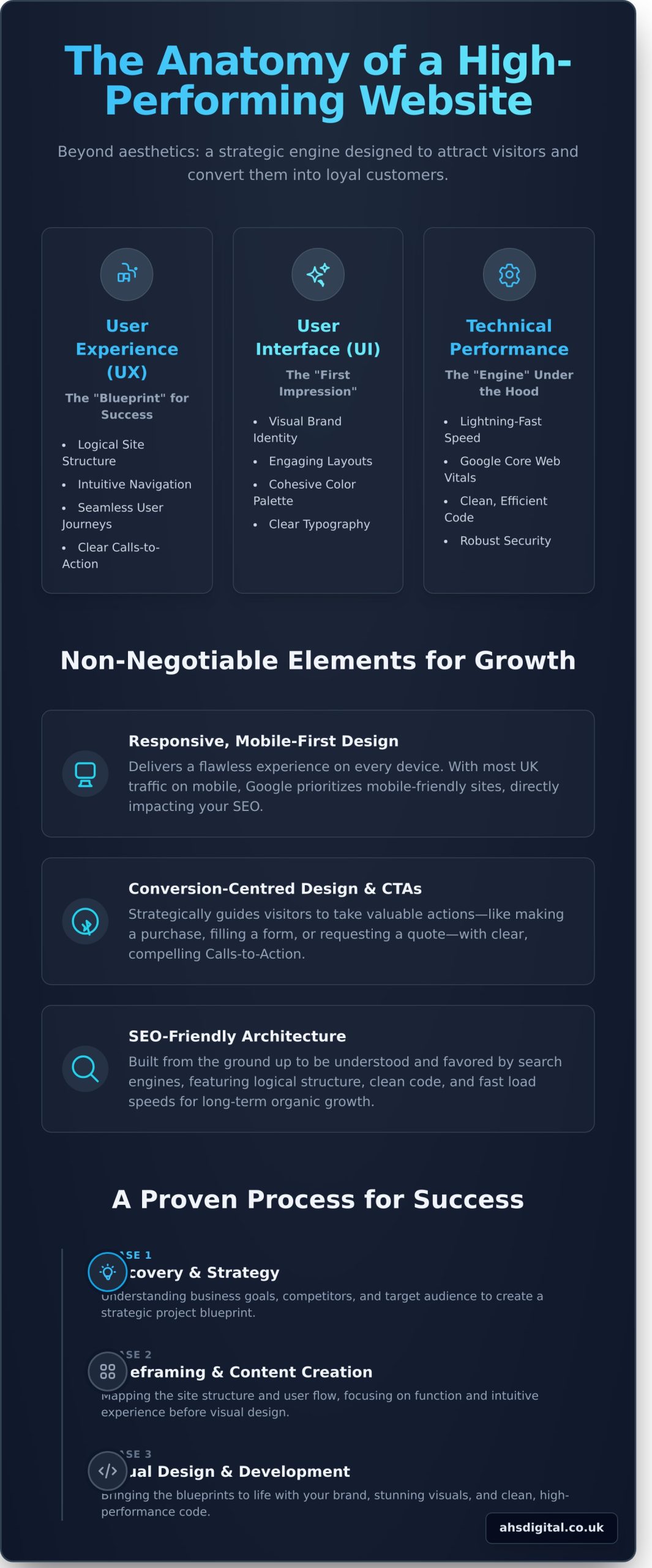
User Experience (UX) Design: The Foundation of Success
User Experience is the invisible architecture of your website. It dictates how a visitor feels while interacting with your platform-whether it’s effortless or frustrating. The goal of great UX is to make the journey from A to B as intuitive and enjoyable as possible. This is achieved through a logical site structure, easy navigation, and clear calls to action that guide users seamlessly. Think of UX as the blueprint for a house: it ensures every room is accessible and serves its purpose perfectly.
User Interface (UI) Design: The Visual First Impression
If UX is the blueprint, User Interface is the interior design. UI encompasses all the visual and interactive elements your visitors see and use, from the buttons and typography to the colour palette and imagery. Its purpose is to create a visually engaging and cohesive interface that not only looks stunning but also reinforces your brand identity. A strong UI makes a powerful first impression and builds trust with your audience from the very first click.
Technical Performance: The Engine Under the Hood
A beautiful design is useless if it’s slow, buggy, or insecure. Exceptional web design is built on a rock-solid technical foundation. This means lightning-fast loading speeds, optimised to meet Google’s Core Web Vitals, which directly impact your SEO rankings. It also means clean, efficient code that makes future updates smoother and more cost-effective. Most importantly, robust security is non-negotiable, protecting both your business and your customers’ valuable data.
The Key Elements of a High-Performing Business Website
Effective web design is not about aesthetics alone; it’s a strategic fusion of technology, user experience, and business objectives. A high-performing website is an engine for growth, designed from the ground up to attract visitors and convert them into loyal customers. For an ambitious business, the following elements are non-negotiable foundations for digital success.
Responsive Design for a Mobile-First World
Your website must deliver a flawless, intuitive experience on every device, from a large desktop monitor to the smartphone in your customer’s pocket. With a significant majority of UK web traffic now coming from mobile devices, a mobile-first approach isn’t a trend- it’s a requirement. Responsive design ensures your site automatically adapts its layout, images, and navigation to fit any screen size, providing a seamless experience for all users. Crucially, Google prioritises mobile-friendly websites, meaning responsiveness directly impacts your ability to be found in search results.
Conversion-Centred Design and Clear Calls-to-Action (CTAs)
Every visitor to your website represents an opportunity. Conversion-centred design is the art of guiding visitors to take a specific, valuable action. This "conversion" could be anything that moves your business forward:
-
Making a purchase
-
Filling out a contact form
-
Requesting a quote
-
Subscribing to your newsletter
This is achieved through a strategic combination of persuasive copy, intuitive layout, and prominent, compelling CTAs (e.g., "Get a Free Quote" or "Shop Now" buttons). Every page on your site should have a clear purpose and a logical next step, eliminating friction and making it easy for users to engage with your business.
SEO-Friendly Architecture and Content
A beautiful website is ineffective if no one can find it. This is why web design and Search Engine Optimisation (SEO) are deeply intertwined. A well-built website features a logical site structure and clean code, which helps search engines like Google crawl, understand, and rank your content. Foundational SEO is baked into the entire web design process, covering critical on-page elements like proper heading structures (H1, H2, etc.), optimised image alt text, and fast page load speeds. This solid architecture makes your ongoing content marketing and SEO efforts far more effective, creating a powerful asset for long-term organic growth.
The Web Design Process: A Strategic Journey from Idea to Launch
Embarking on a new website project can feel daunting, but with a professional agency, it’s a structured and collaborative journey. Far from chaotic, a proven process transforms your business vision into a high-performing digital asset. It’s a partnership designed to move the needle, ensuring every decision is strategic and every pound invested delivers a return.
Phase 1: Discovery and Strategy
This is the most critical phase. Before a single pixel is designed, we dive deep into your business to build a solid foundation based on your specific objectives. This involves:
-
Understanding your core business goals and defining key performance indicators (KPIs).
-
Conducting in-depth competitor analysis to identify market opportunities.
-
Researching your target audience to understand their needs and behaviours.
The outcome is a strategic brief-a detailed blueprint that guides the entire project and ensures we are aligned on the definition of success.
Phase 2: Wireframing and Content Creation
With a strategy in place, we create wireframes. Think of these as the architectural blueprints for your website. They map out the structure, layout, and user flow of each page without the distraction of colours or imagery. The focus is purely on function and creating an intuitive user experience. In parallel, we guide the creation of compelling copy and the sourcing of high-quality visuals that will engage your audience and drive conversions.
Phase 3: Visual Design and Development
Here, the blueprints come to life. Our designers apply your branding-colours, typography, and imagery to the approved wireframes, creating a stunning and user-friendly interface (UI). This phase blends artistic UI with the technical skills that underpin modern web design. For a comprehensive overview of web design, its history and related skills, Wikipedia provides an excellent resource. Once the visual design is approved, our developers write clean, efficient code to build a fully functional, responsive website.
Phase 4: Testing, Launch, and Optimisation
Before going live, the website undergoes rigorous testing across different browsers, screen sizes, and devices to ensure a flawless experience for every visitor. After a smooth migration to your live server, our work isn’t over. Launch is just the beginning. We monitor performance, analyse user data, and identify opportunities for ongoing optimisation to ensure your website continues to deliver tangible results and a strong return on investment.
DIY Builders vs. Web Design Agency: Which is Right for Your Business?
The modern digital landscape presents a crucial choice for every business owner: build your own website using a DIY platform or partner with a professional agency. While platforms like Wix and Squarespace offer an accessible entry point, the right path depends entirely on your ambition, resources, and long-term goals. This isn’t just a technical decision; it’s a strategic one that will define your online growth.
When a DIY Website Builder Makes Sense
For those just starting, a DIY builder can be a pragmatic first step. The primary advantages are low initial costs (often starting from £10-£20 per month), the ability to get a simple site live quickly, and direct control over basic updates. This option is often best for hobbyists, freelancers testing a concept, or micro-businesses with a minimal budget. However, you are often confined to generic templates, customisation is severely limited, and scalability is a major issue. As your business grows, you’ll quickly hit a ceiling.
When to Invest in a Professional Agency
For businesses serious about growth, investing in professional web design is a strategic move that delivers a significant return. You get a bespoke digital strategy aligned with your commercial objectives, expert execution that drives conversions, and a technically sound, SEO-optimised foundation. Most importantly, you gain a scalable asset that grows with you, saving your most valuable resource: your time. This is the path for established SMEs, ambitious startups, and any e-commerce store where performance directly impacts revenue.
The Hidden Costs of ‘Cheap’ Web Design
The low monthly fee of a DIY builder often masks deeper costs. The most significant is your own time-every hour spent learning a platform and wrestling with its limitations is an hour not spent on sales, strategy, or customer service.
Furthermore, many businesses outgrow their DIY site within a year, leading to the expensive and disruptive process of a complete redesign. This "build it twice" scenario negates any initial savings. Without expert oversight, you also face greater security risks and have no dedicated support when technical issues arise, potentially damaging your brand’s reputation and bottom line.
Don’t let your website become a business liability. A strategic partner ensures your online presence is a powerful asset for growth. Ready for a strategic partner? See our work.
How Strategic Web Design Moves the Needle for Your Business
A great website isn’t an expense; it’s a powerful engine for business growth. It’s the difference between spinning your wheels and gaining real traction in a competitive market. We’ve moved beyond thinking of web design as a simple cost and now see it for what it is: a strategic investment that underpins every digital interaction, turning casual visitors into loyal customers and delivering a measurable return on investment (ROI).
Increase Leads and Sales
Your website is your most powerful salesperson, working 24/7. A well-structured site doesn’t just look good; it actively guides potential customers through a carefully designed sales funnel. By optimising user journeys, every element works to:
-
Capture qualified leads with intuitive forms and compelling calls-to-action on dedicated landing pages.
-
Drive direct sales for e-commerce with a seamless checkout process that dramatically reduces cart abandonment.
-
Convert interest into action by making it effortless for users to find what they need and take the next step.
Enhance Brand Credibility and Trust
In the digital marketplace, first impressions are everything. A professional, modern website instantly signals that you are a serious and trustworthy business-it’s your digital handshake. In contrast, a dated or poorly functioning site actively erodes trust and sends potential clients straight to your competitors. Consistent branding, clear messaging, and a polished user interface build the recognition and loyalty that form the foundation of a strong, respected brand.
Improve Marketing ROI Across All Channels
Think of your website as the central hub for all your marketing efforts. Every social media post, email campaign, and PPC advert you run ultimately points back to it. A high-converting website makes every pound of your ad spend more effective, maximising your return. Furthermore, building your site on strong SEO foundations from day one generates a steady stream of valuable, organic traffic over the long term, creating a sustainable asset for business growth.
Ready to transform your website from a simple online brochure into a revenue-generating powerhouse? Let’s discuss how strategic web design can deliver tangible results for your business.
Your Website: The Engine of Business Growth
As we’ve explored, modern web design is far more than a digital brochure or a collection of attractive visuals. It’s a strategic asset that blends intuitive user experience, seamless functionality, and conversion-focused elements to become your most powerful sales and marketing tool. Understanding this distinction, and the strategic process behind a high-performing site, is the first step toward creating a digital presence that doesn’t just look good-it moves the needle for your business.
Choosing the right partner to bring this vision to life is crucial. At AHS Digital, we don’t just build websites; we build growth engines. Our results-driven approach is laser-focused on your ROI, ensuring every design choice serves a business purpose. As a cohesive creative suite, our 100% UK-based team of strategic experts integrates design, marketing, and branding under one roof to deliver a powerful and consistent brand experience.
Your journey to digital excellence starts with a single conversation. Ready to build a website that drives growth? Let’s talk.
Frequently Asked Questions About Web Design
What’s the difference between a web designer and a web developer?
Think of a web designer as the architect who creates the blueprint and visual style of your website. They focus on user experience (UX), layout, and aesthetics to ensure the site is intuitive and engaging. A web developer is the builder who takes those designs and uses code to construct a functional, fast, and secure website. At a cohesive agency, these roles work together seamlessly to transform a creative vision into a high-performance digital asset for your business.
How much does a professional website cost in the UK?
In the UK, a professional website can range from £2,000 for a simple brochure site to over £15,000 for a complex e-commerce platform. The final cost is determined by the project’s scope, including the number of pages, the need for custom features, and content creation. We view this not as an expense but as a crucial investment in your growth, designed to deliver a clear, measurable return on investment (ROI) by attracting and converting customers.
How long does the web design process typically take?
A standard business website typically moves from initial strategy to launch in 6 to 12 weeks. This timeline covers discovery, creative design, technical development, and thorough testing. More complex projects with advanced functionality will naturally require a longer timeframe.
We manage every stage efficiently, but clear communication and timely feedback from you are essential to meeting our shared deadlines and getting your new site up and running for you as quickly as possible.
Do I need to provide the website content and images?
You can, but you don’t have to. While you are the expert on your business, we are a full-service creative suite. Many clients provide their own text and images, which we then optimise for performance and user experience. However, we also offer professional copywriting and photography services to ensure your messaging is compelling and your brand is presented in the best possible light, creating a powerful and cohesive final product that drives results.
What is responsive web design, and why is it important?
Responsive web design ensures your website looks and functions perfectly on any device, from a large desktop monitor to a small smartphone screen. It automatically adjusts layouts, images, and navigation for optimal viewing. With over 50% of all internet traffic coming from mobile devices, a responsive site is no longer a feature-it’s a necessity. It is critical for user satisfaction, lead conversion, and achieving a strong ranking on search engines like Google.
My business already has a website. Do I need a redesign?
Consider redesigning your website if it looks outdated, is difficult to navigate on mobile, loads slowly, or isn’t generating leads. Your website is your digital storefront and a key marketing tool. If it no longer aligns with your brand’s ambition or fails to meet modern user expectations, it’s likely holding your business back. A strategic redesign can elevate your brand, improve performance, and transform your site into a powerful engine for growth.
Read our other blog on e-commerce websites here –